HTML - Div Element
| Start |
|---|
| Basic usage The The It's strongly encouraged by the **The World Wide Web Consortium (W3C)** to view the div element as an element of last resort, for when no other element is suitable. The use of more appropriate elements instead of the div element leads to better accessibility for readers and easier maintainability for authors. For example, a blog post would be marked up using div elements can be useful for stylistic purposes or to wrap multiple paragraphs within a section that are all to be annotated in a similar way. |
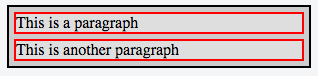
| Nesting It is a common practice to place multiple The This will yield the following result (CSS styles applied for clarity): Nesting inline and block elements While nesting elements you should keep in mind, that there are inline and block elements. while block elements "add a line break in the background", what means, other nested elements are shown in the next line automatically, inline elements can be positioned next to each other by default Avoid deep A deep and oftenly used nested container layouts shows a bad coding style. Rounded corners or some similar functions often create such an HTML code. For most of the last generation browsers there are CSS3 counterparts. Try to use as little as possible HTML elements to increase the content to tag ratio and reduce page load, resulting in a better ranking in search engines.
Syntax
|
Read Article
https://develop.horje.com/learn/1434/reference